
What is mosaic art?
A picture made from many small pieces — stone, glass, tile, or even photos. Here's where it comes from, how it's made, and the easiest way to make your own.
Free to create and preview. You only pay to download the full-resolution file.
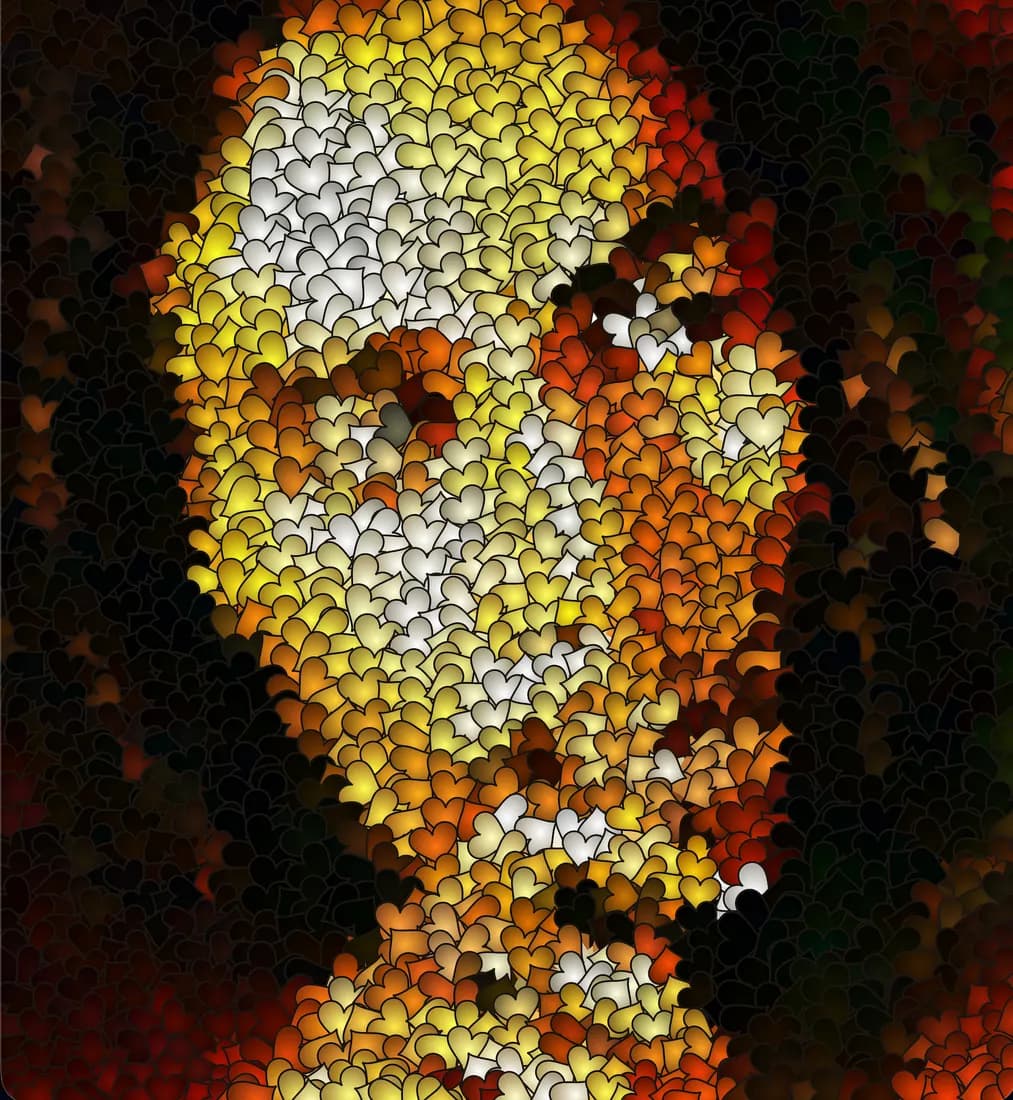
A mosaic is an image assembled from many small pieces, traditionally called tesserae: cut stone, glass, ceramic or pebbles set into a surface and held together with grout. Each piece is a single colour, but together they form a picture — the same idea a photo mosaic carries on today with hundreds of photographs instead of stones.
A short history of mosaics
Some of the earliest mosaics are the clay cone patterns of Uruk in Mesopotamia, around 3000 BC. The ancient Greeks laid floors of natural pebbles, and the Romans turned mosaic into an everyday art, covering villas and baths with cut-stone pictures. Byzantine artists added glittering glass and gold to church walls and domes, and in the 20th century Antoni Gaudí covered Park Güell in Barcelona with broken-tile mosaic, known as trencadís.
In the 1990s the idea went digital: photo mosaics rebuilt one picture from hundreds of smaller photographs, matching each photo to the colour and shape of the spot it fills.
Types of mosaic
Stone and marble mosaics, in the Roman style, use small cut cubes. Glass mosaics — smalti — give the bright, reflective colour of Byzantine work. Ceramic tile mosaics are the most common today, in kitchens, bathrooms and garden projects. Pebble mosaics use natural stones, and broken-tile mosaics (trencadís) use irregular shards of china or tile. Photo mosaics use photographs as the pieces, and word mosaics use words.
How traditional mosaics are made
1. Draw the design on the base — a board, a wall, a tabletop or a stepping stone. 2. Cut or break the tesserae to size with tile nippers. 3. Glue the pieces down with tile adhesive or thinset, leaving small, even gaps. 4. Once it's dry, press grout into the gaps and wipe the surface clean. 5. Polish off the haze and seal it if it will live outdoors or near water.
The easiest first projects use large pieces and a simple design: a coaster, a flower pot or a stepping stone with a bold shape.
The easy way: a mosaic from a photo
If you want the look without the grout, make it digitally. The photo mosaic maker rebuilds any image from hundreds of your own photos in seconds. The stone mosaic maker turns a single photo into cut stone in the Roman style — and its vector PDF or SVG can serve as a pattern if you want to lay a real tiled mosaic by hand. You can also write a portrait in words with the word art generator.
New to photo mosaics? The step-by-step guide and the examples page show what works.
Look closer
Every tile is a real photograph. Zoom into a finished piece — or watch one come together.
Reel
Prefer to make it on your phone?
Made to be displayed
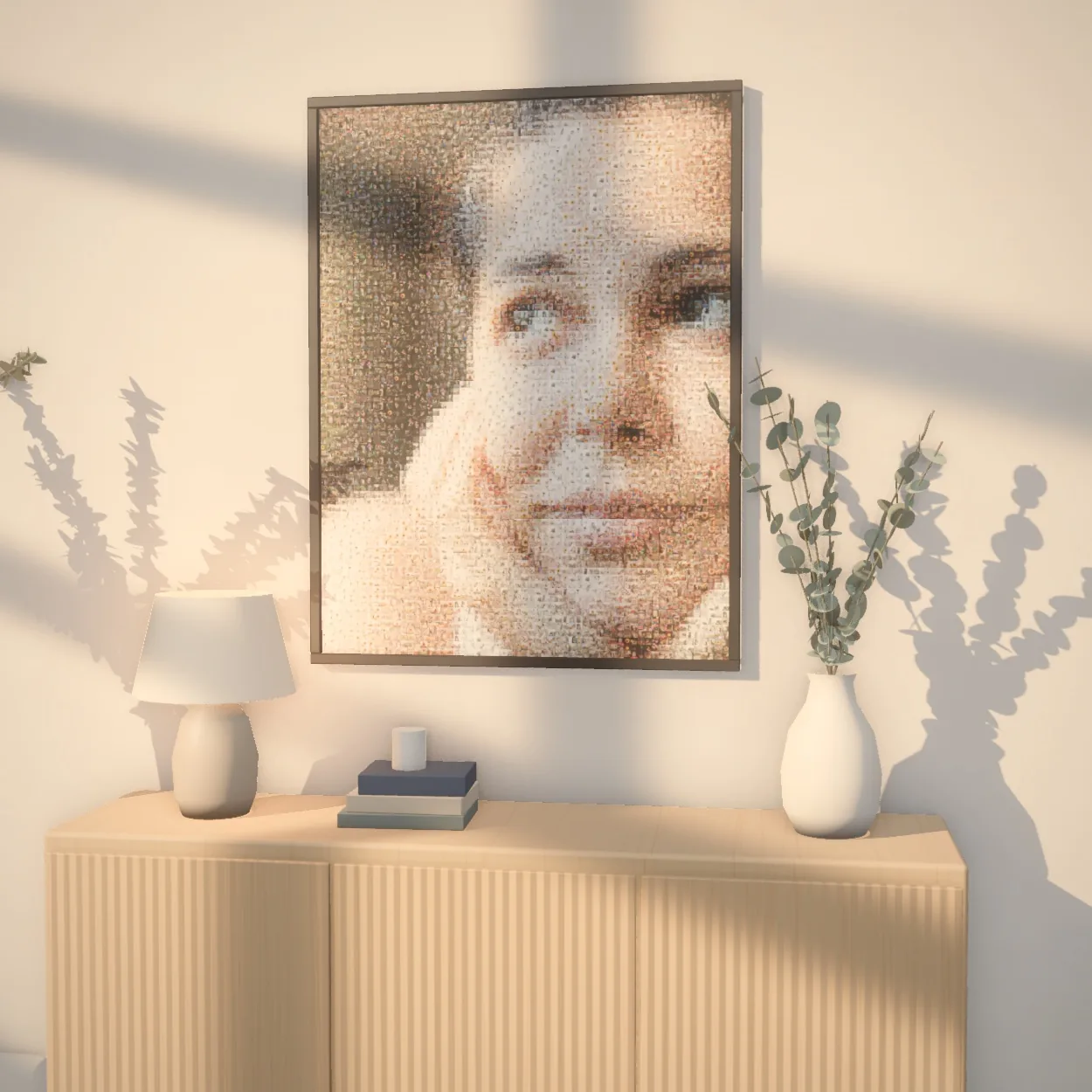
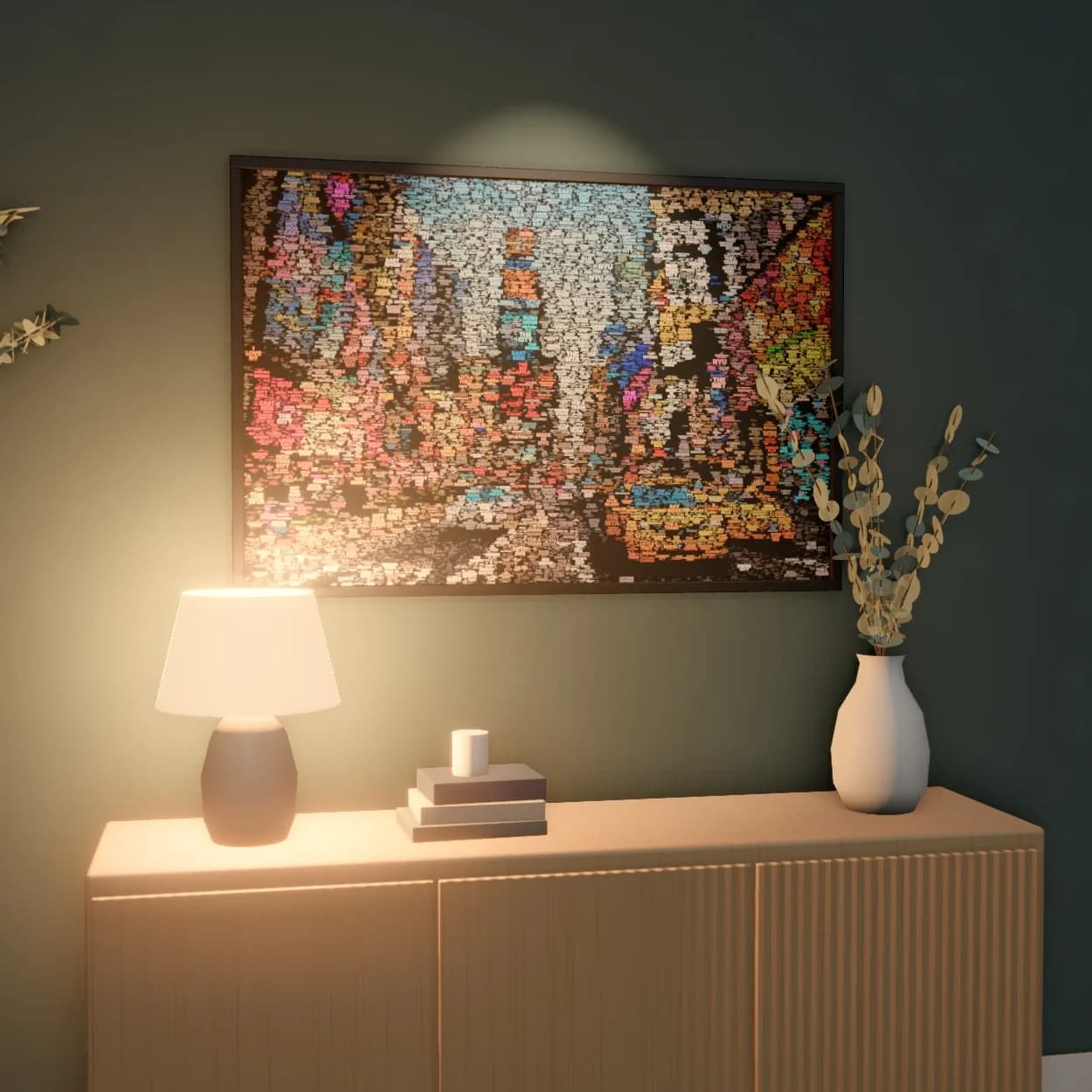
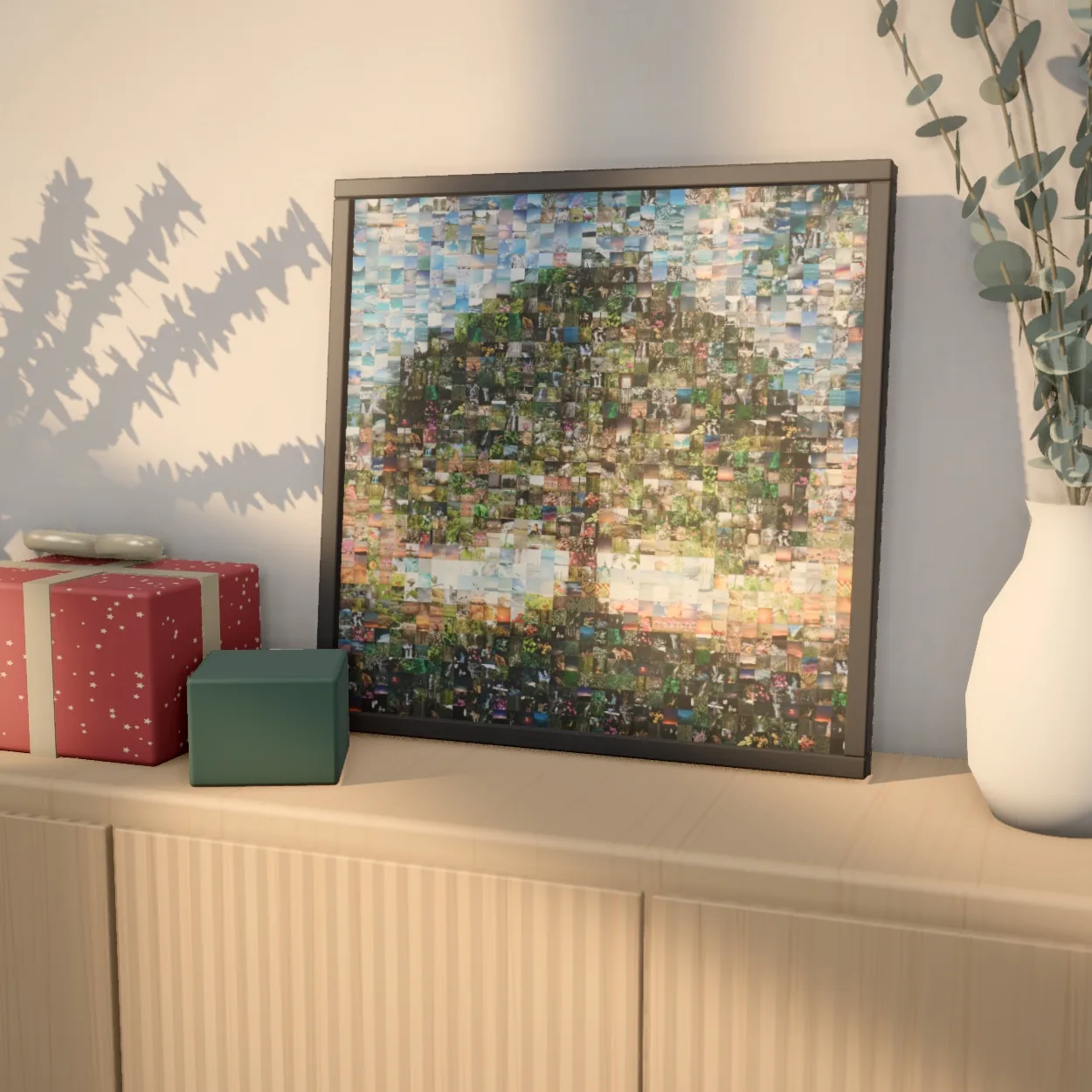
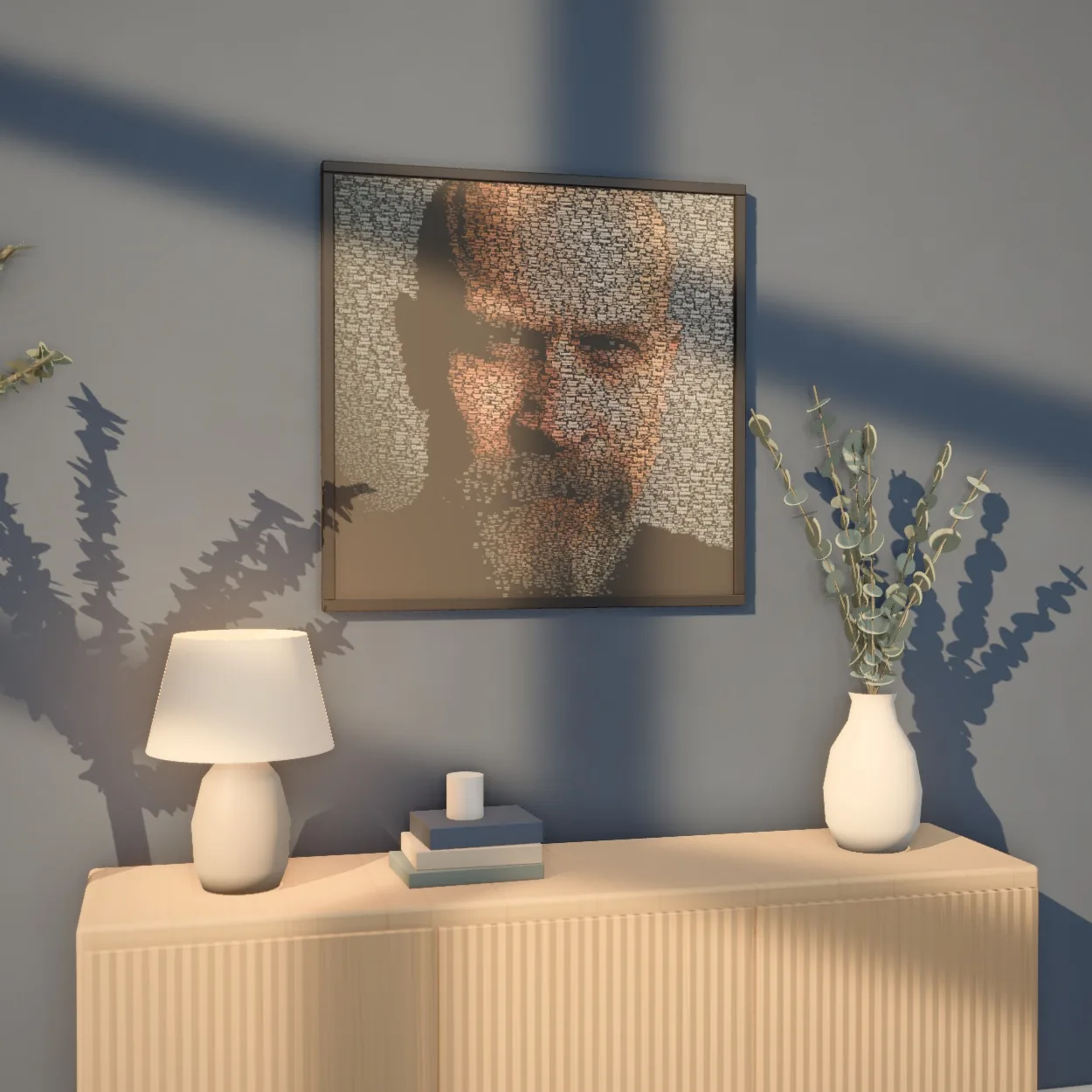
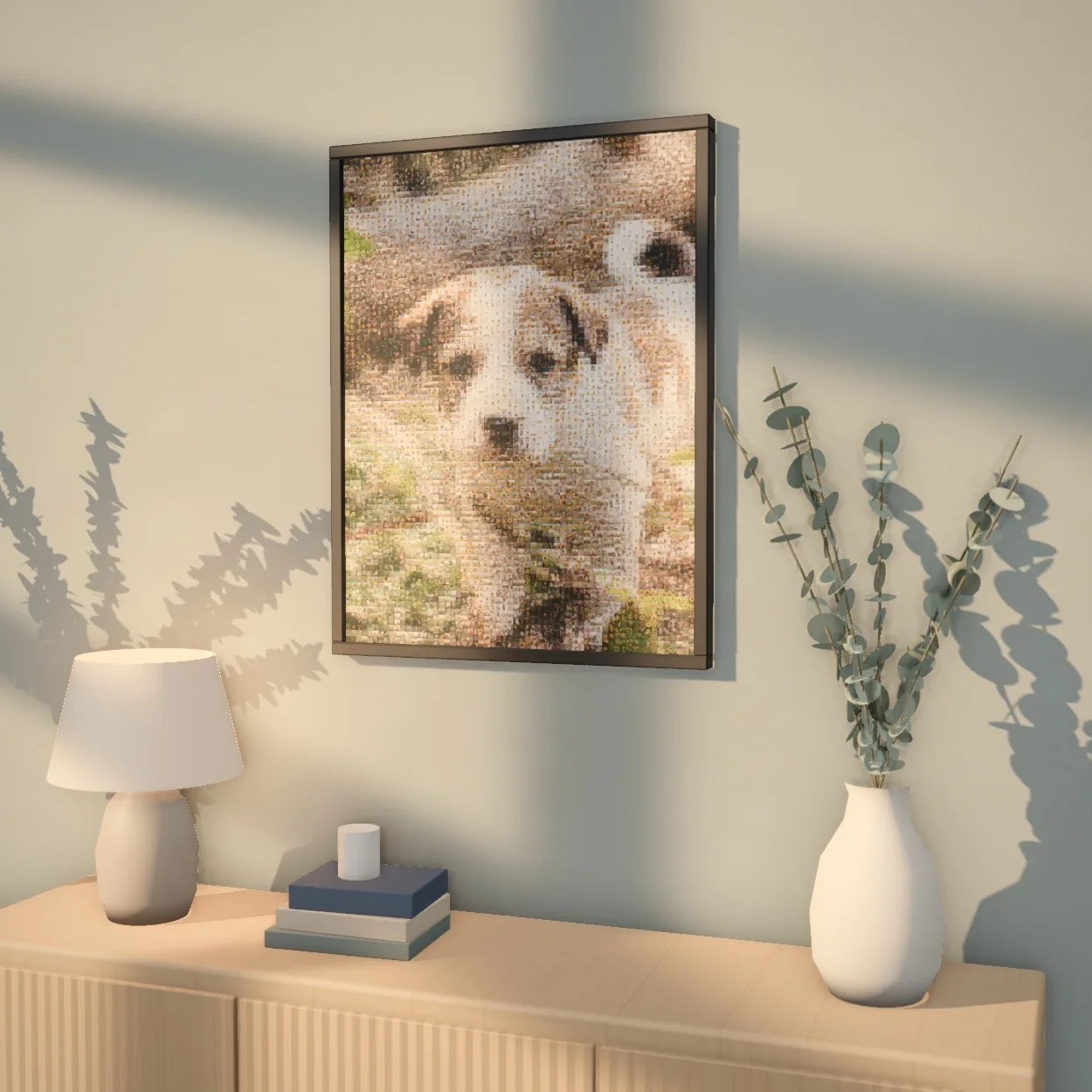
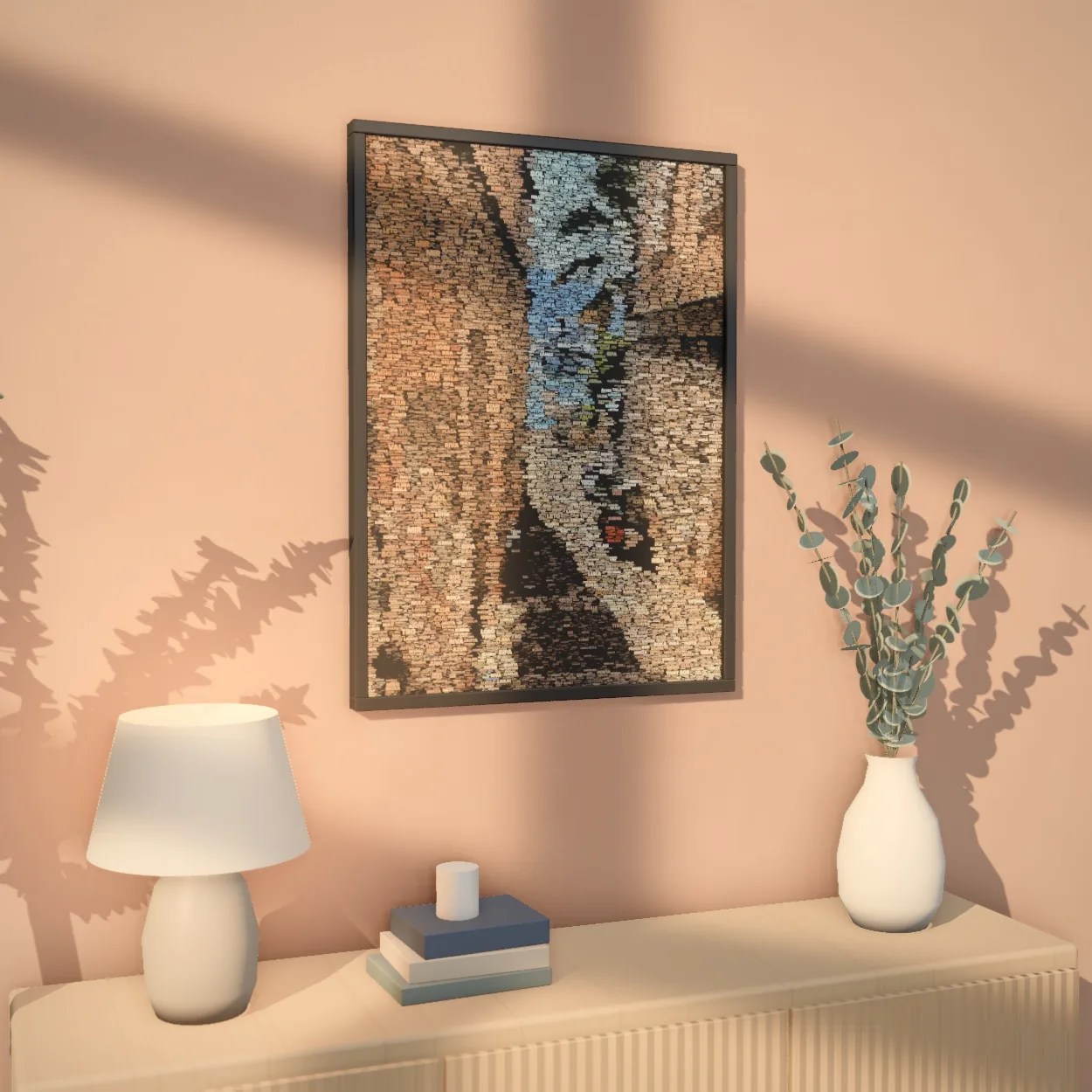
A finished mosaic is a real piece of art — for the living room, as a gift, or printed big enough to fill a wall.
 Up close
 Up close
 Up close
 Up close
 Up close
 Up close
Every mosaic exports in print-ready high resolution, at any size.
Common questions
What is mosaic art?
Art made by assembling many small pieces — stone, glass, ceramic, pebbles or even photographs — into one picture or pattern.
What materials are used for mosaics?
Traditionally cut stone, marble, glass (smalti), ceramic tile and pebbles, set in adhesive and grout. Photo mosaics use photographs instead.
What is the easiest mosaic for beginners?
By hand: a small project with large tiles and a bold design, like a coaster or stepping stone. Digitally: a photo or stone mosaic made from one photo, which takes minutes and needs no tools.
What is the difference between a mosaic and a photo mosaic?
A traditional mosaic uses single-coloured pieces like stone or glass. A photo mosaic uses whole photographs as its pieces, so up close you see every photo and from afar you see the picture.